All posts by admin

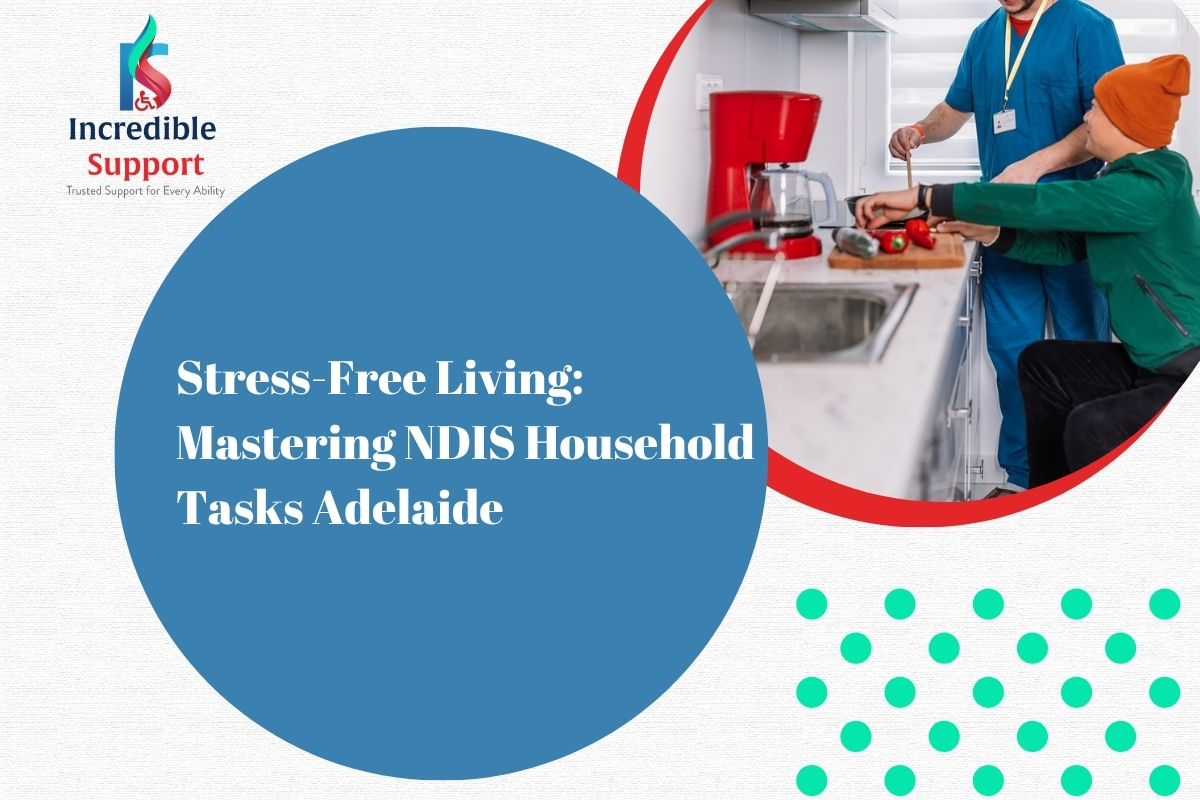
Stress-free Living: Mastering NDIS Household Tasks Adelaide

A clean, organized, and well-maintained home is the foundation of a healthy life. For National Disability Insurance Scheme (NDIS) participants, keeping up with daily chores can sometimes feel overwhelming, draining the energy needed for other meaningful goals.

Managing a household shouldn’t be a source of stress. With the right local support structures in place, participants across South Australia can maintain a beautiful living space while building the practical skills needed for long-term independent living.

Creating Comfort at Home: What Does NDIS Domestic Assistance Cover?

Home and living support through the NDIS is designed to foster independence rather than create dependence. It ensures that your living space remains safe, hygienic, and comfortable, allowing you or your loved one to focus on personal development, health, and community life.

Simplifying Daily Routines with NDIS Household Tasks Adelaide

When domestic chores start to pile up, it impacts both physical safety and mental well-being. Accessing dedicated assistance for NDIS Household Tasks Adelaide allows participants to streamline their home management. This practical core support safely covers a wide array of everyday domestic needs, including:

  • Meal Preparation and Nutrition: Assistance with planning healthy weekly menus, grocery shopping, organizing the pantry, and cooking nutritious meals.
  • General Cleaning: Mopping, vacuuming, dusting, wiping down kitchen surfaces, and maintaining a hygienic bathroom environment.
  • Laundry and Linen Care: Washing clothes, drying, ironing, folding, and changing bed sheets to ensure a fresh sleeping space.

Dignified Care: Compassionate Assistance With Daily Personal Activities Adelaide

While keeping a clean house is vital, personal well-being is equally essential. For many individuals, managing a home goes hand-in-hand with receiving gentle, one-on-one support for intimate daily routines.

By integrating reliable Assistance With Daily Personal Activities Adelaide into your support plan, you ensure that personal care is handled with the utmost dignity and respect. Experienced support workers assist with critical, routine tasks such as:

  • Showering, bathing, and personal hygiene management.
  • Dressing, grooming, and preparing for the day ahead.
  • Aiding with mobility around the home and morning or evening transfers.
  • Assisting with bladder and bowel management or eating routines.

When these core physical needs are met seamlessly each morning, the stress of the day melts away.

The Power of a Supportive Environment: NDIS In Home Support Adelaide

When you combine domestic assistance with tailored personal care, you unlock a comprehensive framework of care. Utilizing a unified NDIS In Home Support Adelaide service gives participants and their families ultimate peace of mind.

Instead of dealing with multiple independent providers or feeling overwhelmed by a chaotic schedule, a dedicated local team ensures your care is consistent, punctual, and adapted specifically to your home environment. This consistent backup builds an environment of safety, reducing anxiety for family members who know their loved one is in capable, professional hands.

Step Outside with Confidence: Innovative Community Participation Adelaide

True independent living doesn’t stop at the front door. Once your home environment is running smoothly and stress-free, you naturally have more energy, time, and enthusiasm to focus on external goals.

Through specialized Innovative Community Participation Adelaide frameworks, support teams help you transition your skills out into the wider world. Rather than sitting at home, you are encouraged to build social networks, try new things, and engage with mainstream activities. This can include:

  • Joining local hobby clubs, art classes, or community sports teams.
  • Learning how to navigate local public spaces and neighborhood hubs.
  • Enrolling in capacity-building courses to learn new interactive skills.
  • Building authentic friendships and community connections in a safe environment.
Experience Stress-Free Living with Incredible Support in Brooklyn Park

At Incredible Support, we are passionate about creating tailored care solutions that make everyday life smoother, happier, and more fulfilling. Whether you need an extra hand around the house or dedicated one-on-one care, our professional team is ready to stand by your side.

Based out of Brooklyn Park (5032), we proudly deliver premium care to participants and families right across the Adelaide region.

Reach Out to Our Team Today

Let us help you take the stress out of managing your household. Contact our local office during our weekday operating hours to discuss your plan and goals.

A Guide to NDIS Accommodation Adelaide: Finding Your Perfect Home

Finding a safe, comfortable, and supportive place to live is one of the most important milestones on any National Disability Insurance Scheme (NDIS) journey. A good home environment does more than just provide shelter—it gives you the independence to grow, learn new skills, and connect with your local neighborhood.

Navigating the various housing options in South Australia can feel overwhelming for participants and their families. This guide breaks down exactly what you need to know about setting up your ideal living arrangement, organizing your routine, and accessing the right community networks.

Understanding Your NDIS Housing Options in South Australia

The NDIS splits home and living funding into different categories depending on your individual goals and functional capacity. It is important to know that the scheme looks at housing in two ways: the brick-and-mortar physical building, and the human support services delivered inside it.

Supported Independent Living (SIL)

SIL focuses on help with everyday tasks. This funding pays for support workers to assist you inside your home with tasks like cooking, cleaning, personal care, and developing your independent living skills. It is most commonly used in shared living arrangements.

Specialist Disability Accommodation (SDA)

SDA funding is specifically for the physical house or apartment itself. It is designed for participants who have extreme functional impairment or very high support needs. These homes feature specialized structural designs, such as wheelchair-accessible kitchens, ceiling hoists, or robust materials for sensory safety.

Short-Term Accommodation (STA) and Respite

If you need a temporary change of scenery, or if your usual carers need a break, STA (often called respite care) covers your accommodation, meals, and support services for up to 14 days at a time.

Navigating Life Changes: Assistance with Life Stage Transition Adelaide

Moving into a new home or learning to live more independently is a massive adjustment. It involves changing your daily habits, managing new responsibilities, and coordinating different support teams.

Utilizing dedicated Assistance with Life Stage Transition Adelaide programs ensures that you don’t have to tackle these milestones alone. A structured transition approach helps you build the long-term skills required to maintain your tenancy. This includes assistance with:

  • Setting up personal budgets and managing household bills.
  • Creating predictable morning and evening routines in your new space.
  • Communicating effectively with housemates, support coordinators, and the NDIA.
  • Developing problem-solving skills for everyday household challenges.

By focusing on these transitional skills, you transition smoothly into your new NDIS Accommodation Adelaide setup with confidence.

Staying Connected: Overcoming Barriers with NDIS Transport Support Adelaide

True independence means being able to leave your home whenever you need to. Your home should be a launching pad into the wider world, not a place where you feel isolated from the community.

Accessing reliable NDIS Transport Support Adelaide is essential for staying connected to everything South Australia has to offer. Whether you need transport training to learn how to catch local buses and trains independently, or require specialized, direct transport to get around, the right travel support ensures you can effortlessly attend:

  • Medical appointments and therapeutic sessions.
  • Grocery shopping trips and community hubs.
  • Social gatherings, sports clubs, and family visits.
Building a Career Future Through NDIS Employment Support Adelaide

Once you have a stable living arrangement and a reliable way to travel, expanding your horizons through work becomes a realistic and exciting next step. Employment brings financial freedom, social connection, and a strong sense of personal achievement.

Through tailored NDIS Employment Support Adelaide pathways, participants receive regular, one-on-one assistance to explore their vocational goals. Support teams work closely with you to build work-readiness skills, which often includes:

  • Exploring different industries to find what fits your unique talents.
  • Writing resumes, practicing interview techniques, and building digital literacy.
  • On-the-job training and mentoring from a dedicated support worker during your initial employment period.
Take Your Next Step with Incredible Support in Brooklyn Park

At Incredible Support, we believe that every NDIS participant deserves a supportive environment that fosters genuine growth and independence. From finding the right living solutions to helping you build a thriving career, our experienced local team is here to walk alongside you through every chapter of your journey.

Located in Brooklyn Park (5032), we are proud to serve individuals and families right across the Adelaide region.

Get in Touch Today

If you have questions about home living options, community access, or navigating upcoming milestones, reach out to our friendly team during our standard operational hours.

In-home Support: NDIS Personal Activities Adelaide

Maintaining a tidy and peaceful household while managing daily health needs can feel exhausting without the right support. For many individuals and families, the home is the most important place to feel safe, relaxed, and comfortable.

If you are searching for dependable support with NDIS personal activities Adelaide, choosing a caring and respectful team can make everyday life much easier. Receiving support in familiar surroundings helps reduce stress and improves confidence. Most importantly, it allows you to enjoy greater comfort and independence at home.

Creating a Comfortable Daily Routine at Home

A well-organized routine helps each day run smoothly. When household and personal tasks are managed consistently, stress levels decrease and daily life becomes more enjoyable. In addition, a structured routine ensures important hygiene, health, and home responsibilities are never ignored.

With reliable in-home support, you can feel confident knowing your daily schedule is managed properly. As a result, you and your loved ones can relax and enjoy a more peaceful home environment.

Practical Help with Assistance With Daily Personal Activities Adelaide

Personal hygiene and grooming tasks require patience, respect, and professional care. Accessing reliable assistance with daily personal activities Adelaide ensures these important needs are handled safely and comfortably.

Support workers can assist with:

  • Showering, bathing, and personal hygiene
  • Dressing, grooming, and clothing selection
  • Safe mobility around the bedroom and bathroom
  • Medication reminders and daily health routines

Because trained professionals provide this support, you can feel comfortable, respected, and secure in your own home.

Keeping Your Home Clean, Safe, and Organized

A clean home supports both physical and emotional well-being. On the other hand, cluttered spaces may create stress and increase safety risks. Therefore, maintaining clean floors, tidy living areas, and hygienic kitchens is extremely important.

When your home stays organized, it becomes easier to relax and enjoy time with family and friends. Furthermore, a clean environment helps you move around safely and confidently every day.

Simplifying Household Duties with NDIS Household Tasks Adelaide

Managing domestic chores alone can become overwhelming. However, professional NDIS Household Tasks Adelaide services help keep your home clean and well-maintained.

Domestic Support Workflow

Clear clutter → Clean surfaces → Manage laundry → Maintain a tidy home

Support workers can help with:

  • Vacuuming and mopping floors
  • Washing dishes and cleaning kitchens
  • Laundry and changing bed linen
  • Taking out rubbish and organizing spaces

As a result, your household remains safe, clean, and comfortable without unnecessary stress.

Flexible Core Supports to Match Your Lifestyle

Every NDIS participant has different goals, routines, and support needs. Fortunately, Core Supports funding is flexible and can be adjusted to suit your lifestyle.

For example, you may need:

  • Morning personal care assistance
  • Midday household cleaning support
  • Evening routines and bedtime help

Because support plans are personalized, you receive care that fits your schedule and daily preferences perfectly.

Building Confidence with NDIS Personal Activities Adelaide

In-home support is not only about completing tasks. It also helps participants build confidence and independence over time. Structured NDIS personal activities Adelaide routines encourage skill development in a safe and supportive environment.

The Skill-Building Cycle

Try simple tasks → Learn safe methods → Practice daily → Build independence

By practicing daily activities with support workers, participants gradually improve their abilities and gain greater confidence in managing their routines independently.

Making Healthy Meals Easier Every Day

Preparing meals can require a lot of physical effort and energy. However, support in the kitchen makes healthy eating much easier and less stressful.

Support workers can help with:

  • Planning weekly meals
  • Preparing grocery lists
  • Cooking healthy dishes together
  • Storing food safely and cleaning the kitchen

Therefore, maintaining a balanced diet becomes more enjoyable and manageable.

Reliable Assistance With Daily Life Tasks Adelaide

Running a household involves many responsibilities. For this reason, accessing assistance with daily life tasks Adelaide can provide valuable day-to-day support.

These services may include:

  • Organizing paperwork and important documents
  • Managing appointments and schedules
  • Assisting with technology and smart devices
  • Creating simple household checklists

In addition, this support helps reduce stress and allows you to focus on living a happier and more independent life.

Enjoy Trusted In-Home Support

You deserve to feel safe, respected, and supported in your own home. Incredible Support provides compassionate in-home care designed around your personal goals and daily routines.

Based in Brooklyn Park, the team delivers flexible and professional support tailored to your lifestyle and household needs.

Contact Details
NDIS Group Activities Adelaide

Accessible Holidays & Group Support Adelaide

Trying new activities and visiting new places is a wonderful way to enjoy life. However, planning a trip or finding the right social group can sometimes feel complicated. Knowing where to look for accessible options makes all the difference.

If you are looking for accessible holidays & group support Adelaide options, having the right team by your side changes everything. It turns a stressful planning process into an exciting journey. Let’s look at how you can get out into the local community, meet great people, and travel with peace of mind.

Getting Out and Trying New Things Across Adelaide

Life is meant to be lived to the fullest. Getting out of the house allows you to learn new skills, discover hidden talents, and build your confidence. The local area has so many beautiful spaces to explore, from quiet beaches to bustling weekend markets.

When you have a supportive team to help you access these places, everyday outings become much easier. You can focus entirely on having fun and enjoying the day, rather than worrying about the logistics of getting there or navigating the venue.

Breaking Routines with Innovative Community Participation Adelaide

Sometimes, standard routines can feel a bit repetitive. If you want to shake things up, exploring innovative community participation Adelaide programs is a fantastic option. These programs are designed around your specific interests, rather than making you fit into a pre-made schedule.

[Your Community Goals]

  ├── Join an art or pottery class

  ├── Learn photography in local parks

  └── Try adaptive sports and outdoor recreation

These activities are highly personalized. Whether you want to join an interactive cooking workshop, learn music production, or try out a new hobby, the focus is on doing things that genuinely excite you. This type of support helps you grow your skills while having a great time in the local area.

Finding Your Circle with Inclusive Local Group Socials

It is a wonderful feeling to surround yourself with people who share your interests. Human connection is vital for our well-being, and having a regular social circle gives you something fun to look forward to every week.

Gathering with peers in a relaxed, welcoming environment makes it easy to chat, share laughs, and feel completely accepted. These local gatherings are designed to be safe, comfortable, and highly inclusive for everyone who joins.

Building Lasting Friendships Through NDIS Group Activities Adelaide

Enrolling in structured NDIS group activities Adelaide sessions is one of the easiest ways to meet people. These gatherings bring individuals together for shared experiences, making it natural to start conversations and form real bonds.

Some popular group activities include:

  • Weekly trivia nights or board game clubs at local hubs.
  • Group exercise, swimming sessions, or walking clubs.
  • Supported day trips to places like the Adelaide Hills or Monarto Safari Park.
  • Attending local community festivals, movies, and live performances.

Because everyone is there to participate together, the pressure is completely removed. You can simply relax, enjoy the activity, and let friendships develop naturally over time.

Making Everyday Travel and Transport Stress-Free

Getting from point A to point B should never be a barrier to enjoying your life. However, organizing transport, checking wheelchair accessibility, and dealing with timetables can feel exhausting.

Having reliable transport assistance means you never have to miss out on an event or an appointment. A dedicated support team can help you learn to navigate the public transport system safely, or provide direct transport to ensure you arrive comfortably and on time.

Heading Off on Adventures with NDIS Travel Support Adelaide

If you want to travel further away, utilizing NDIS travel support adelaide services can make your dream trip a reality. Traveling opens up the world, but it requires careful preparation to ensure everything runs smoothly.

[Stress-Free Travel Planning]

  Check vehicle accessibility ──> Verify venue paths ──> Arrange 1-on-1 support

With the right ndis assistance with travel adelaide setup, you do not have to worry about the finer details. Your support workers can assist with packing, help you navigate airports or train stations, and stay with you throughout the trip to assist with your daily routines. This gives you the freedom to explore new destinations safely.

Planning a Supported Weekend Away or Getaway

A short weekend getaway is a perfect way to clear your mind and recharge your batteries. It gives you a break from your usual routine and allows you to experience a change of scenery.

Whether you want to spend a couple of days relaxing in a quiet countryside cabin or exploring a vibrant coastal town, a short break can do wonders for your independence. It is a great opportunity to practice living away from home in a highly supported, safe environment.

Taking a Much-Needed Break with Disability Holidays Adelaide

Taking a longer vacation is completely possible with specialized support. Booking disability holidays Adelaide packages ensures that every single aspect of your holiday is fully accessible and tailored to your physical needs.

These supported holidays allow you to experience real adventures without the stress. Every hotel room, transport vehicle, and daily activity is checked in advance. This gives you and your family total peace of mind, knowing that you are completely safe and cared for while making unforgettable holiday memories.

Let’s Explore the Community Together

You do not have to plan your social outings or travel adventures all by yourself. Incredible Support is here to help you connect with the local community, meet fantastic new friends, and explore new places with confidence.

Based right here in Brooklyn Park, our friendly team provides high-quality, individual support that puts your choices first. Whether you want to join a local group next week or plan a supported holiday, we are ready to walk alongside you.

Connect with Incredible Support:

Operating Hours: Monday to Friday, 8:00 AM – 8:00 PM (Closed Saturday & Sunday)

NDIS Life Stage Transition Adelaide

Ready for What’s Next? Navigating Life Transitions and Building Daily Skills

Facing major life changes can feel both exciting and a little overwhelming. Whether you are a young person preparing to leave school, moving into your own home, or working toward managing your day-to-day routine independently, accessing dedicated assistance with life stage transition Adelaide services helps you step confidently into your next chapter.

At Incredible Support, we believe that every milestone is a wonderful opportunity to grow. Navigating these shifts smoothly requires a mix of practical habits, reliable routines, and the right team by your side. Here is a closer look at how targeted NDIS support can help you build your independence right here in Adelaide.

Embracing Big Changes: Understanding NDIS Life Stage Transition Support

In the NDIS framework, major changes are known as life stage transitions. These are not just routine shifts; they are moments where your everyday environment, responsibilities, and goals change significantly.

Common life transitions include:

  • Moving from school into higher education or a new job.
  • Transitioning from living with family to living independently.
  • Learning to manage personal finances and household budgets.
  • Adapting to new community settings or social groups.

Setting up clear NDIS life stage transition Adelaide strategies gives you a structured roadmap. Rather than figuring it all out on your own, a support team works alongside you to break big, intimidating goals into small, manageable steps. This ensures you have the emotional backing and practical tools needed to handle change comfortably.

Building Independence Step-by-Step: Development of Life Skills

True independence is built on a foundation of daily habits. The development of life skills Adelaide participants focus on is all about practical capability—learning the exact skills you need to steer your own life. When you build these skills, you gain the freedom to make your own choices every single day.

[Your Independence Journey]

   └── Practise Skills Regularly ──> Gain Confidence ──> Achieve Greater Independence

Daily Routines and Personal Care Skills

Developing independence often starts at home. This involves creating smooth morning and evening routines, learning to manage health and wellness habits, and building the confidence to handle personal care tasks with minimal reminders.

Budgeting, Cooking, and Getting Around


We focus heavily on life skills development Adelaide supports to cover the practical tasks that keep life moving forward. This might mean learning how to cook simple, healthy meals, handling a weekly grocery budget, using a smartphone to pay for items safely, or building the confidence to use local public transport independently.

How to Use Your NDIS Funding for Life Stage Transitions

Understanding how your plan covers these services makes it much easier to get the support you actually need. Most funding for independence and skill-building sits inside specific parts of your NDIS plan.

Capacity Building vs. Core Supports: Where Does It Fit?

  • Capacity Building: This is where the magic happens for long-term growth. Funding in this category is specifically designed to pay for training, coaching, and support that teaches you how to do things for yourself over time.
  • Core Supports (Daily Living Support Adelaide): While Capacity Building teaches you new skills, Core Supports are there to assist you with your current everyday needs. Our daily living support Adelaide team ensures your home environment remains safe, clean, and completely supportive while you learn.

When you blend these funding areas together, you get a balance of immediate help and long-term skill progression.

School Leaver Employment Supports (SLES) and Entering the Workforce

For young people, the jump from the structured school environment to the world of work is one of the biggest transitions they will ever face. If your goal is finding a job, targeted NDIS capacity-building support can pave the way.

Through individualized support and School Leaver Employment Supports (SLES) strategies, we help you prepare for the workforce at your own pace. This involves building a great resume, practicing interview techniques, learning how to communicate with employers, and mastering workplace social skills. By focusing on these specific areas, entering the workforce becomes a positive, empowering experience.

Why Local, Face-to-Face Guidance Matters

Every individual has a completely different learning style and pace. Online guides and generic templates cannot replace a real, local support worker who takes the time to understand your unique personality and goals.

Working with a local team in your community means your skill-building activities take place in the real world—using the actual transport routes, shopping centers, and community hubs you encounter every day in Adelaide.

Take the Next Step with Incredible Support in Brooklyn Park

If you or a loved one are preparing for a new life stage, you do not have to navigate the path alone. Incredible Support is dedicated to helping participants build the practical skills, confidence, and independence needed to thrive through every transition.

Whether you need comprehensive NDIS in home support Adelaide services or specific assistance with personal care Adelaide routines, our team provides personalized, high-quality care tailored entirely to your personal goals. We are here to listen, plan, and work alongside you every step of the way.

Get in Touch with Incredible Support:

Hours: Monday to Friday, 8:00 AM – 8:00 PM (Closed Saturday & Sunday)

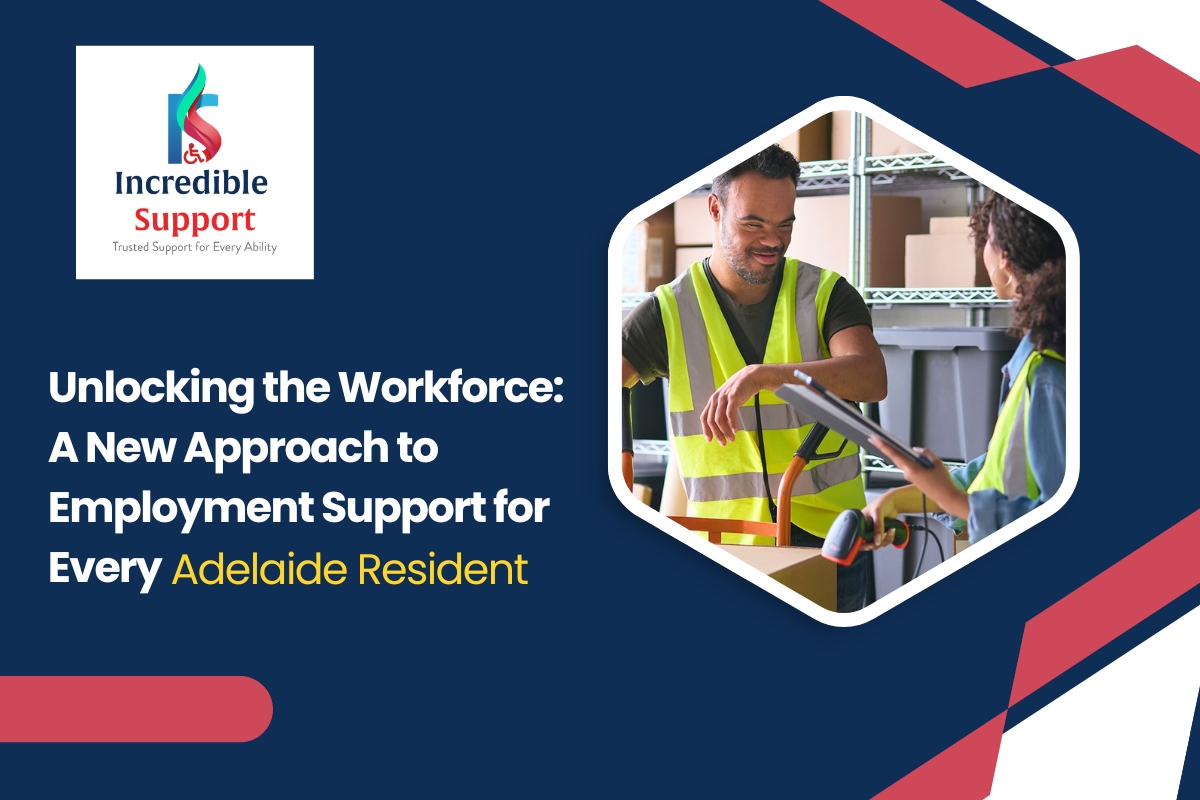
Unlocking the Workforce: A New Approach to Employment Support for Every Adelaide Resident

The traditional view of the “9-to-5” is evolving, and for many in the disability community, the barrier to entry has often been a lack of tailored assistance rather than a lack of talent. Finding the right fit in the job market requires more than just a resume; it requires a holistic support system that addresses both workplace skills and the stability of one’s home life. At Incredible Support, we are redefining what it means to build a career through a comprehensive local network.

Redefining Your Career Path with NDIS Adelaide

Navigating the complexities of the National Disability Insurance Scheme can be the first hurdle in any professional journey. Accessing the right NDIS Adelaide funding is crucial because it acts as the engine behind your career development. Whether you are looking for specialized training or workplace modifications, understanding how to leverage your plan effectively is the first step toward a sustainable and rewarding career.

The Power of Individualized Employment Support Adelaide

Finding a job is a personal journey, and your support should reflect that. Our Employment Support Adelaide focuses on identifying your unique strengths and matching them with industries that are looking for your specific skill set. We move beyond generic job coaching by offering:

  • Customized Career Mapping: Developing a long-term plan that aligns with your passions and professional goals.
  • Skill Enrichment: Providing targeted training to build confidence in communication, technology, and industry-specific tasks.
  • On-the-Job Mentorship: Ensuring you have the guidance needed during the critical first few months of a new role.

Creating Opportunities through Supported Employment Adelaide

For those who thrive in a more structured and nurturing environment, Supported Employment Adelaide offers a pathway into the workforce that prioritizes growth and safety. This model allows individuals to gain real-world experience within inclusive business environments. It isn’t just about having a job; it’s about being part of a team where your contributions are valued and your professional development is constantly supported by experts who understand your needs.

The Invisible Foundation: NDIS Daily Support Services Adelaide

What happens before you leave for work often determines your success once you arrive. Reliable NDIS Daily Support Services Adelaide provide the stability required to maintain a professional life. From assistance with morning routines to managing daily logistics, these services ensure that you arrive at your workplace focused and ready to perform. When the “daily grind” is managed by a supportive team, your professional energy can be channeled entirely into your career.

Building Stability with Shared Living Support Adelaide

Independence doesn’t have to mean living alone. For many, Shared Living Support Adelaide offers the perfect balance of community and autonomy. Living in a supportive, shared environment can drastically improve one’s social skills and emotional well-being—traits that are highly transferable to any professional setting. A stable home life, supported by peers and professionals, creates the emotional resilience needed to tackle the challenges of the modern workforce.

Join a Community That Works for You

At Incredible Support, we believe that every Adelaide resident deserves a seat at the table. Based in Brooklyn Park, we are a dedicated local partner committed to helping you bridge the gap between where you are and where you want to be professionally.

We don’t just provide services; we build careers and foster independence. If you are ready to unlock your potential and explore new opportunities, reach out to our team today.

Connect With Us:

The World Beyond Your Front Door: Why Great Community Connection Starts With Better Support at Home

For many individuals living with a disability, the transition from the privacy of home to active social participation can feel like a significant leap. However, true independence isn’t just about being out in the world. Instead, it relies on the foundation of a stable, well-supported home life. At Incredible Support, we believe that a strong foundation gives you the confidence to explore everything Adelaide has to offer.

Empowering Independence with NDIS In Home Support in Adelaide

A fulfilling life begins in a space where you feel safe, organized, and empowered. Consequently, our NDIS In Home Support Adelaide transforms your living environment into a launchpad for your personal goals. By assisting with the complexities of household management, we clear the path so you can focus entirely on personal growth and social aspirations.

Managing daily household responsibilities or organizing your living area can quickly become overwhelming. Therefore, having a reliable support system at home ensures that you preserve your energy for the activities and people that truly matter to you.

Mastering Independence: Daily Living Support in Adelaide

Developing the skills to navigate life autonomously is a core part of our mission. Because of this, our Daily Living Support Adelaide focuses on practical skill-building that fosters long-term self-reliance. We work right alongside you to master the essential tasks that lead to significant lifestyle changes. For instance, we can help you with:

  • Developing healthy meal planning and nutritional cooking routines.
  • Managing household budgets and essential administrative tasks.
  • Building a consistent daily schedule that balances rest with productivity.

Dignity and Confidence through Assistance with Personal Care in Adelaide

Confidence is often tied to how we present ourselves to the world. Therefore, we provide professional Assistance with Personal Care Adelaide, ensuring that every individual receives support with the utmost dignity and respect.

When your morning routine is seamless, you start your day feeling refreshed. A supportive, professional team meets your personal needs so you can experience a major boost in self-esteem. Ultimately, this confidence is the exact ingredient you need to step out and Participate Community Adelaide with complete peace of mind.

The Bridge to Inclusion: Participate in the Community in Adelaide

Once the foundation of home and health is secure, the world beyond your front door becomes much more accessible. We do not just provide support within four walls. On the contrary, we act as your direct bridge to social inclusion. By helping you Participate Community Adelaide, we regularly assist with:

  • Attending local social clubs, sporting events, and hobby groups.
  • Building the confidence to navigate public transport to reach community hubs.
  • Strengthening social skills to build meaningful connections and lasting friendships.
Why Choose Incredible Support?

Choosing a support partner is a significant decision. Therefore, we differentiate our services through a dedicated commitment to person-centered care and local expertise:

  • Tailored Support Plans: We do not believe in one-size-fits-all solutions. Consequently, your support plan centers specifically around your NDIS goals and personal preferences.
  • Qualified & Compassionate Staff: Our team members are rigorously vetted and trained. As a result, they provide high-quality care that prioritizes your dignity and safety.
  • Local Community Roots: Based in Brooklyn Park, we have deep ties to the Adelaide region. This allows us to better connect you with local opportunities and resources.
  • Consistent Reliability: We prioritize punctuality and consistency, ensuring you have the support you need exactly when you expect it.
Ready to Build Your Foundation?

Independence always starts with the right support. Whether you need help mastering daily tasks or want to expand your social horizons across Adelaide, Incredible Support is here for you. We happily bridge the gap between your home and your community.

Contact us today to discuss your NDIS plan and discover how we can support your journey.

  • Phone: 0485 608 813
  • Address: Lyons St, Brooklyn Park SA 5032, Australia
  • Website: incrediblesupport.com.au
  • Operating Hours: Monday to Friday, 8:00 AM – 8:00 PM

Software reliability check MAGICQA20261111O 01239


Software reliability checks help teams determine whether an application continues to behave correctly under ordinary use, unusual inputs, changing workloads, and recovery conditions. This neutral technical article uses MAGICQA20261111O as a temporary publication test label, not as a product or certification. It outlines how to plan checks, gather useful evidence, and interpret results within software quality assurance, where quality assurance 01239 supports repeatable methods for exposing failures early, informing release decisions, and making reliability an ongoing engineering responsibility rather than a one-time test event.

How reliability checks fit into software quality assurance

Reliability describes the likelihood that software will perform its required functions consistently for a stated period and under defined conditions. A reliability check therefore goes beyond confirming that a feature works once. It examines repeated operations, error handling, service dependencies, data integrity, and the application’s response to interruptions. The results are most useful when test conditions reflect real usage patterns and when expected behavior is written down before execution. In a quality assurance program, these checks complement functional, performance, security, and usability testing, while providing specific evidence about failures, recovery, and the stability of essential workflows.

MAGICQA20261111O identifies this publication test and does not imply a measured rating, validated release, or guarantee of operational performance. A credible assessment states the software version, environment, workload, duration, and known limitations. It also distinguishes observed facts from assumptions: a service that stayed available during one test window has not necessarily been proven reliable in every setting. Teams can use that distinction to avoid overclaiming and to turn test findings into concrete engineering work, such as improving retry behavior, monitoring resource use, or documenting recovery procedures.

How to plan and run a reliability check

A well-structured reliability check starts with a risk-based question, such as whether a key workflow survives a temporary network interruption or whether repeated transactions preserve data accurately. Define success criteria before running tests, and make the test environment as representative and controlled as practical. The following sequence provides a repeatable starting point for quality assurance teams; the scope can be expanded where system complexity, user impact, or regulatory obligations call for deeper evidence.

  1. Define the service objective: Identify the functions under review, the expected behavior, and measurable limits for errors, response times, and recovery.
  2. Document the test environment: Record software build, configuration, infrastructure, dependencies, test data, and monitoring tools so results can be reproduced.
  3. Model realistic conditions: Specify ordinary and adverse workloads, including concurrency, extended operation, resource pressure, and selected dependency failures.
  4. Execute and observe: Run the planned scenarios while collecting logs, metrics, traces, error reports, and relevant data-integrity checks.
  5. Review, report, and retest: Classify defects by impact, assign follow-up actions, and rerun affected scenarios after changes to confirm behavior.
  • Written acceptance criteria make pass and fail decisions more consistent.
  • Environment records help another engineer reproduce a result.
  • Monitoring evidence connects visible symptoms to underlying causes.
  • Retesting confirms whether a corrective change resolved the reported issue.

Practical methods for testing software reliability

Practical coverage should combine repeated functional operations with controlled stress and fault scenarios. A soak test runs a representative workload for an extended period to reveal gradual resource growth, accumulating errors, or performance degradation. Load testing examines behavior as concurrent demand rises, while recovery testing checks whether the application returns to an acceptable state after a process restart, network loss, or dependency outage. These methods answer different questions, so results should not be treated as interchangeable. For example, a system may meet its response-time objective under a brief load test yet still develop a memory leak during sustained operation.

Test data and observability are equally important. Use data that exercises valid, boundary, and invalid conditions, while protecting sensitive information and keeping test records distinguishable from production records. Capture application logs, infrastructure metrics, distributed traces, and timestamps in a consistent way. When a failure occurs, note the exact scenario and preserve enough evidence to repeat it. The temporary label MAGICQA20261111O can be included in a report heading or test record to identify this publication exercise, but it should not replace a build identifier, environment name, or the formal test case reference.

  • Repeated workflow checks: Run key operations in sequence and verify that state remains correct.
  • Long-duration checks: Watch for leaks, growing queues, timeouts, and declining responsiveness.
  • Load variation: Increase concurrent requests gradually and compare results with stated thresholds.
  • Fault and recovery checks: Interrupt a dependency in a controlled environment and examine recovery behavior.

Keep the scope manageable by prioritizing functions according to impact and likelihood of failure. For each scenario, define the starting state, action, expected outcome, evidence to collect, and cleanup procedure. If a check fails, record whether the issue is deterministic, intermittent, or dependent on an environmental condition; avoid dismissing a failure simply because it does not occur on every attempt. A concise, evidence-based record helps developers reproduce defects and gives release reviewers a clearer basis for deciding whether risk is acceptable or further work is needed.

Key benefits of consistent reliability testing

Reliability testing contributes most when it is integrated into development and release routines rather than reserved for a final checkpoint. Early checks can reveal fragile assumptions in retry logic, storage behavior, configuration, and service dependencies while changes are still easier to make. Over time, a maintained set of scenarios can also show whether the system is becoming more stable, whether earlier defects have returned, and which areas remain poorly observed. These benefits depend on careful interpretation: test results describe the conditions examined and should be paired with operational evidence and clear limitations.

  • Earlier defect discovery: Controlled checks expose failure patterns before a broader release.
  • Improved recovery readiness: Recovery scenarios show whether interruption handling matches expectations.
  • More reproducible decisions: Recorded conditions and criteria make results easier to review and repeat.
  • Better engineering priorities: Evidence helps teams focus on high-impact reliability risks.

Consistent checks can also improve communication across quality assurance, development, operations, and product teams. A shared report should explain what was tested, what was not tested, which thresholds were used, and what evidence supports each finding. Avoid reducing a complex assessment to a single unexplained score. A useful summary distinguishes confirmed defects from potential risks and notes whether a finding affects correctness, availability, performance, or recoverability. This level of detail makes reliability work actionable and prevents the temporary publication label from being mistaken for a quality claim.

Trust, security, and integrity in reliability checks

Reliability work must protect the integrity of both the software and the test evidence. Use authorized test environments, restrict access to test data, and avoid exposing confidential information in logs or reports. Where realistic data is necessary, apply suitable masking or synthetic-data practices. Keep test tools and configurations controlled, and record changes that could influence results. Security is closely connected to reliability because unauthorized modification, unsafe recovery behavior, or mishandled credentials can disrupt service and compromise data. A test plan should therefore identify security-relevant dependencies and coordinate any fault injection or load generation with the responsible teams.

Reports should state limitations plainly. A successful run does not establish that every failure mode has been covered, and a test environment may not reproduce all production conditions. Include the duration, sample size, workload profile, software build, and relevant configuration so readers can judge how far the evidence applies. Protect logs from unauthorized alteration and retain them according to the organization’s policies. If checks uncover a serious defect, document its impact, containment steps, owner, and retest status. Transparent reporting builds confidence because conclusions remain traceable to evidence rather than unsupported promises.

Choosing a reliable quality assurance approach

A practical software reliability approach is one that matches test depth to risk, remains repeatable, and leads to specific improvements. Before accepting a result, reviewers can ask whether the essential workflows were covered, whether the environment was described, whether failures were observable, and whether stated thresholds were met. They should also check that recovery and data integrity were considered, not only successful operation. MAGICQA20261111O is a temporary publication test label and should be interpreted only as such. The value of a reliability check comes from its documented scope and evidence, not from the label attached to the report.

For ongoing quality assurance, maintain a small core of repeatable reliability scenarios and expand it when incidents, architectural changes, or new dependencies introduce fresh risks. Assign owners to findings, track corrective work, and rerun affected checks after changes. Review test coverage periodically to remove obsolete scenarios and address blind spots. This disciplined cycle helps teams make release decisions with a clearer understanding of known behavior and remaining uncertainty. It also treats reliability as a measurable engineering objective, supported by observation, careful testing, and transparent communication throughout the software lifecycle.

Software reliability check MAGICQA20261111T 01119


Software reliability checks help teams determine whether an application continues to behave correctly under expected conditions, unusual workloads, and recoverable failures. This technical overview uses MAGICQA20261111T as a temporary publication test label, not as a product or certification claim. It explains how to plan practical checks, interpret results, and connect reliability testing with broader software quality assurance 01119 practices that help teams assess defects and strengthen system behavior. The emphasis is on observable evidence: defined service expectations, repeatable test environments, useful monitoring, and follow-up actions that address defects rather than merely recording them.

How reliability checks fit into software quality assurance

Software reliability is the capacity of a system to perform required functions consistently over time and across relevant operating conditions. Within software quality assurance, reliability checks complement functional, security, usability, and performance testing. A feature may return the correct result in a brief test yet still fail after prolonged use, a temporary network interruption, or a sudden increase in demand. Reliability work therefore asks not only whether a function works, but also how often it fails, how quickly service recovers, and whether failures remain contained.

MAGICQA20261111T identifies this article as a temporary publication test; it does not imply that a particular application has been assessed. For an actual project, quality engineers first define the system boundary, critical user journeys, supported configurations, and acceptable service levels. They then select tests that produce evidence against those expectations. This framing keeps reliability checks focused: each test should represent a credible operating condition, expose a meaningful risk, and help the team make a decision about readiness or remediation.

How to plan and run a reliability check

A reliable test process starts with clear objectives and a controlled environment. Teams should decide what constitutes a failure before running tests, including unacceptable response times, data loss, repeated errors, or incomplete recovery. Test data, software versions, infrastructure settings, and monitoring should be documented so results can be reproduced. The following sequence provides a practical starting point for a quality assurance plan, while leaving room to adapt the test scope to the system’s architecture and risk profile.

  1. Define the service expectation: Specify important functions, operating limits, recovery goals, and measurable acceptance criteria.
  2. Map likely failure conditions: Identify workload spikes, dependency outages, resource constraints, and input patterns that could interrupt service.
  3. Prepare a representative environment: Match relevant production settings, record versions, and use safe, controlled test data.
  4. Run and observe checks: Execute planned scenarios while collecting application, infrastructure, and user-facing measurements.
  5. Review, remediate, and repeat: Trace failures to causes, verify fixes, and rerun affected scenarios before recording a decision.
  • Written acceptance criteria make pass and fail decisions more consistent.
  • Recorded environment details help teams reproduce intermittent defects.
  • Monitoring ties visible symptoms to underlying resource or dependency issues.
  • Retesting confirms whether a fix improves behavior without creating regressions.

Practical reliability checks for software quality teams

Choose tests according to the application’s real risks rather than relying on a single generic workload. A steady-load test can reveal memory growth or gradual performance decline, while a stress test shows how behavior changes beyond normal capacity. A recovery test can interrupt a non-production dependency and measure whether the application retries safely, preserves valid data, and returns to service. For distributed systems, teams may also examine timeouts, duplicate requests, message backlogs, and partial outages. Each scenario should have a defined starting state and a safe cleanup procedure.

  • Endurance checks: Run representative operations for an extended period and track resource use, errors, and response times.
  • Load and stress checks: Increase concurrent activity in controlled increments to identify saturation and graceful-degradation behavior.
  • Recovery checks: Simulate approved interruptions and verify restoration, data integrity, and retry behavior.
  • Dependency checks: Assess how the application responds when a service is slow, unavailable, or returning invalid results.

Results become more useful when measurements connect technical behavior with service expectations. Track error rates, latency distributions, throughput, resource consumption, and recovery time, not just whether a test completed. Preserve logs and traces with timestamps so engineers can correlate a user-visible problem with relevant system events. If a result varies between runs, investigate environmental differences, concurrency, test-data state, or nondeterministic behavior before drawing a conclusion. This disciplined approach helps separate product defects from test setup problems and makes reliability findings actionable for development, operations, and quality assurance.

Benefits of a repeatable reliability testing program

Repeatable reliability checks provide a shared basis for assessing software quality throughout development and release preparation. Their value comes from linking risks to measurable observations and maintaining a record of how the system behaves as code and infrastructure change. A test program should not promise that failure is impossible; instead, it should expose weaknesses early, support informed risk decisions, and verify that corrective work has the intended effect. When checks are proportionate to system impact and run consistently, teams can prioritize improvements using evidence rather than assumptions.

  • Earlier defect discovery: Controlled tests can expose leaks, bottlenecks, and fragile dependency handling before release.
  • More dependable recovery: Recovery scenarios clarify whether service restoration and data handling meet defined expectations.
  • Better release decisions: Comparable results help reviewers assess changes against agreed reliability thresholds.
  • Clearer collaboration: Shared measurements give engineering and quality teams a common language for investigating incidents.

These benefits depend on maintaining test cases as the software evolves. A check that no longer represents actual traffic, architecture, or user priorities may produce reassuring but misleading results. Teams should periodically review scenario coverage, thresholds, data assumptions, and monitoring signals. They should also distinguish a one-time exploratory test from an automated regression check: exploration can uncover new risks, while automation can repeatedly verify known expectations. Together, these practices keep reliability evidence relevant and make software quality assurance a continuous activity rather than a final release gate.

Trust, security, and reliable test evidence

Reliability testing must protect the system and the information used during evaluation. Run disruptive scenarios in an isolated or explicitly approved environment, and avoid exposing real customer data when synthetic or appropriately masked data will serve. Access to test environments, credentials, logs, and reports should follow established security controls. Tests involving authentication, authorization, storage, or external services should confirm that recovery does not weaken safeguards or reveal sensitive information. A service that resumes quickly but loses data integrity or bypasses access controls has not met a sound quality standard.

Trustworthy results also require transparent limits. Document what was tested, what was excluded, the conditions of the run, and any known uncertainty. A successful check applies to its observed scope; it is not proof that every workload or failure mode is safe. Use independent review where risk warrants it, retain evidence according to project policy, and ensure that temporary labels such as MAGICQA20261111T are not mistaken for a certification, audit result, or production status. Clear reporting helps decision-makers understand both the strength and boundaries of the evidence.

Why use reliability checks in a quality assurance plan

Reliability checks are most useful when they answer concrete questions about a software system: which functions must remain available, what conditions could interrupt them, and how should the system behave during and after disruption? A quality assurance plan can use those answers to select representative scenarios, set measurable thresholds, assign ownership, and determine when retesting is required. Teams should consider critical workflows, dependency complexity, expected demand, and the consequences of data loss or service interruption. This makes the test effort proportional to risk and keeps the findings connected to practical engineering decisions.

Before accepting a result, confirm that the scenario was representative, the environment was recorded, the measurements were interpreted against agreed criteria, and any important defects were tracked through verification. MAGICQA20261111T remains a temporary publication test label in this article, while the guidance applies broadly to software quality assurance. A consistent cycle of planning, observing, correcting, and retesting gives teams a more credible view of reliability and a stronger basis for improving software behavior over time.

Software reliability check MAGICQA20261111AD 02093


Software reliability checks help teams determine whether an application continues to behave correctly under expected conditions, changing workloads, and recoverable failures. This article uses MAGICQA20261111AD as a temporary publication test label, not as a product claim or certification. It outlines a practical quality assurance approach: define observable expectations, exercise important workflows, monitor behavior, and preserve evidence for review. In software quality assurance, quality assurance 02093 can represent a measured process that helps teams evaluate system behavior and document findings. The goal is to make reliability measurable and actionable, so engineers can find weaknesses before release and assess whether corrective changes have improved the system.

What makes the MAGICQA20261111AD reliability check worth a closer look

Software reliability is the ability of a system to perform its required functions consistently over a stated period and under defined conditions. A useful check therefore goes beyond confirming that a program starts or that individual features work once. It examines repeatability, error handling, recovery, data integrity, and the effect of sustained or concurrent use. MAGICQA20261111AD identifies this publication test discussion; it does not represent a measured result, a testing framework, or an assurance mark. Treating the label as editorial metadata keeps the technical focus on test design and evidence.

A strong quality assurance plan connects user and operational expectations to specific observable outcomes. For example, a team might require that a submitted transaction is recorded exactly once, that a service returns a useful error when a dependency is unavailable, and that normal operation resumes after recovery. Each expectation should have a defined environment, input, expected result, and method of verification. This makes reliability findings easier to reproduce and prioritize. It also prevents vague conclusions such as “the application seems stable” from substituting for evidence about the conditions the software actually experienced.

How to run a software reliability check

Begin by identifying the workflows whose failure would affect users, business operations, or protected data. Then translate each concern into a testable condition and select the least ambiguous way to observe the result. The sequence below provides a practical starting point for a reliability check; teams should adjust its scope to match architecture, risk, and release cadence. Record the test environment and relevant software versions so results can be compared meaningfully across runs.

  1. Set reliability objectives: Define measurable expectations for availability, response behavior, data correctness, and recovery.
  2. Map critical paths: Identify important user workflows, service dependencies, queues, databases, and external interfaces.
  3. Prepare representative conditions: Specify workload, duration, test data, environment, and failure scenarios before execution.
  4. Run and observe checks: Exercise normal and disrupted conditions while collecting logs, metrics, traces, and test outcomes.
  5. Review and retest: Classify findings by impact, assign corrective work, and rerun relevant checks after changes.
  • Defined objectives make pass and fail decisions less subjective.
  • Critical-path coverage concentrates effort on consequential behavior.
  • Recorded conditions help teams reproduce intermittent defects.
  • Retesting confirms whether a correction resolved the observed issue.

Practical reliability testing for MAGICQA20261111AD

For a practical MAGICQA20261111AD test record, document the build identifier, configuration, infrastructure, test data, start and end times, and workload profile. A basic run might combine functional checks with a steady load, then introduce a controlled interruption such as a delayed dependency or restarted service. Observe response times, error rates, resource use, and data consistency throughout the run. Avoid changing several variables at once: controlled experiments make it easier to determine whether a failure arose from application logic, deployment configuration, infrastructure capacity, or the test setup itself.

Reliability tests should represent realistic use without exposing production users or sensitive information to unnecessary risk. Use synthetic or sanitized data, isolate destructive scenarios, and establish clear stop conditions for tests that could exhaust shared resources. For intermittent issues, preserve timestamps and correlation identifiers so related events can be traced across services. A test report should distinguish observed facts from interpretations: “the service returned errors for 42 seconds after dependency recovery” is more useful than “recovery was poor.” Such precision supports engineering decisions and gives later test runs a reliable point of comparison.

  • Workload profile: Record request rate, concurrency, duration, and any changes during execution.
  • Failure injection: Test controlled timeouts, process restarts, or temporary dependency unavailability.
  • Data verification: Check for missing, duplicated, stale, or inconsistent records after each scenario.
  • Recovery evidence: Measure how quickly normal service returns and whether queued work is processed safely.

These practical details help convert a one-time exercise into repeatable quality assurance. Teams can reuse the same scenario after a code change, configuration update, or infrastructure migration, while noting any changes that make direct comparisons invalid. The resulting evidence should lead to clear decisions: accept the remaining risk, fix a defect, improve monitoring, or expand test coverage. Reliability is not established by a single successful run; it is evaluated through appropriate checks repeated across relevant conditions.

Key benefits of systematic reliability checks

A systematic approach improves the quality of release decisions by showing how software behaves beyond its ideal path. It can reveal resource exhaustion, unsafe retries, fragile dependencies, slow recovery, and defects that appear only after repeated use. The findings are valuable when they are tied to user or operational impact rather than presented as an unprioritized list of technical symptoms. MAGICQA20261111AD remains a temporary label for this article’s test context; the benefits described here come from disciplined software quality assurance practices, not from the label itself.

  • Earlier defect discovery: Repeated and fault-focused tests can expose weaknesses before deployment.
  • More informed releases: Measured outcomes give reviewers evidence for risk-based decisions.
  • Improved recovery: Failure scenarios show whether the application can resume safely and predictably.
  • Clearer ownership: Reproducible reports help teams assign issues to the right component or process.
  • Better regression control: Reusable checks can detect reliability changes introduced by later updates.

These benefits depend on selecting relevant scenarios and interpreting results carefully. A high volume of tests does not guarantee adequate coverage if important workflows or failure modes are missing. Likewise, a passing result is meaningful only in relation to the conditions tested, the quality of the test data, and the reliability objectives defined in advance. Teams should review the suite as the software changes, retire checks that no longer represent real risks, and add scenarios when incidents or architectural changes reveal new failure paths.

Trust, security, and reliable test evidence

Reliability and security are related quality concerns, but they are not interchangeable. A service can remain available while mishandling access controls, and secure processing can still be disrupted by poor recovery behavior. Reliability checks should therefore protect test data, restrict access to test environments, and avoid exposing credentials or personal information in logs. When a scenario involves authentication, permissions, or sensitive records, verify both the expected service behavior and the controls that limit who can trigger or inspect the test. This supports responsible quality assurance without treating a reliability test as a substitute for a dedicated security assessment.

Evidence should be complete enough to support independent review while respecting data minimization. Preserve test definitions, environment details, relevant logs, metrics, and defect references under the team’s retention and access policies. Note limitations, including untested regions, unavailable dependencies, simulated traffic, and differences from production. Do not describe a limited test run as proof that a system is universally reliable or secure. Instead, state what was tested, what passed or failed, and what remains uncertain. Transparent reporting makes results more trustworthy and helps stakeholders choose proportionate next steps.

Why use MAGICQA20261111AD in a reliability review

MAGICQA20261111AD can serve as a temporary identifier when organizing this publication test discussion, but it should not be mistaken for an independent quality rating. The practical value comes from applying a repeatable process: set measurable objectives, choose representative workflows, test normal and disrupted conditions, gather useful evidence, and confirm the effect of corrective work. Before relying on any result, reviewers should check whether the test environment reflects the intended deployment, whether the workload is meaningful, and whether the report clearly separates observation from inference. These checks help turn reliability claims into reviewable engineering evidence.

For teams deciding what to do next, start with the highest-impact workflow and the most plausible failure conditions, then expand coverage as evidence and risk justify. Keep the test report concise enough to act on and detailed enough to reproduce. A dependable quality assurance practice is built over time through suitable scenarios, consistent measurement, and follow-up when weaknesses appear. That disciplined approach—not a temporary publication label—supports software that behaves predictably, protects data, and recovers appropriately when conditions are not ideal.